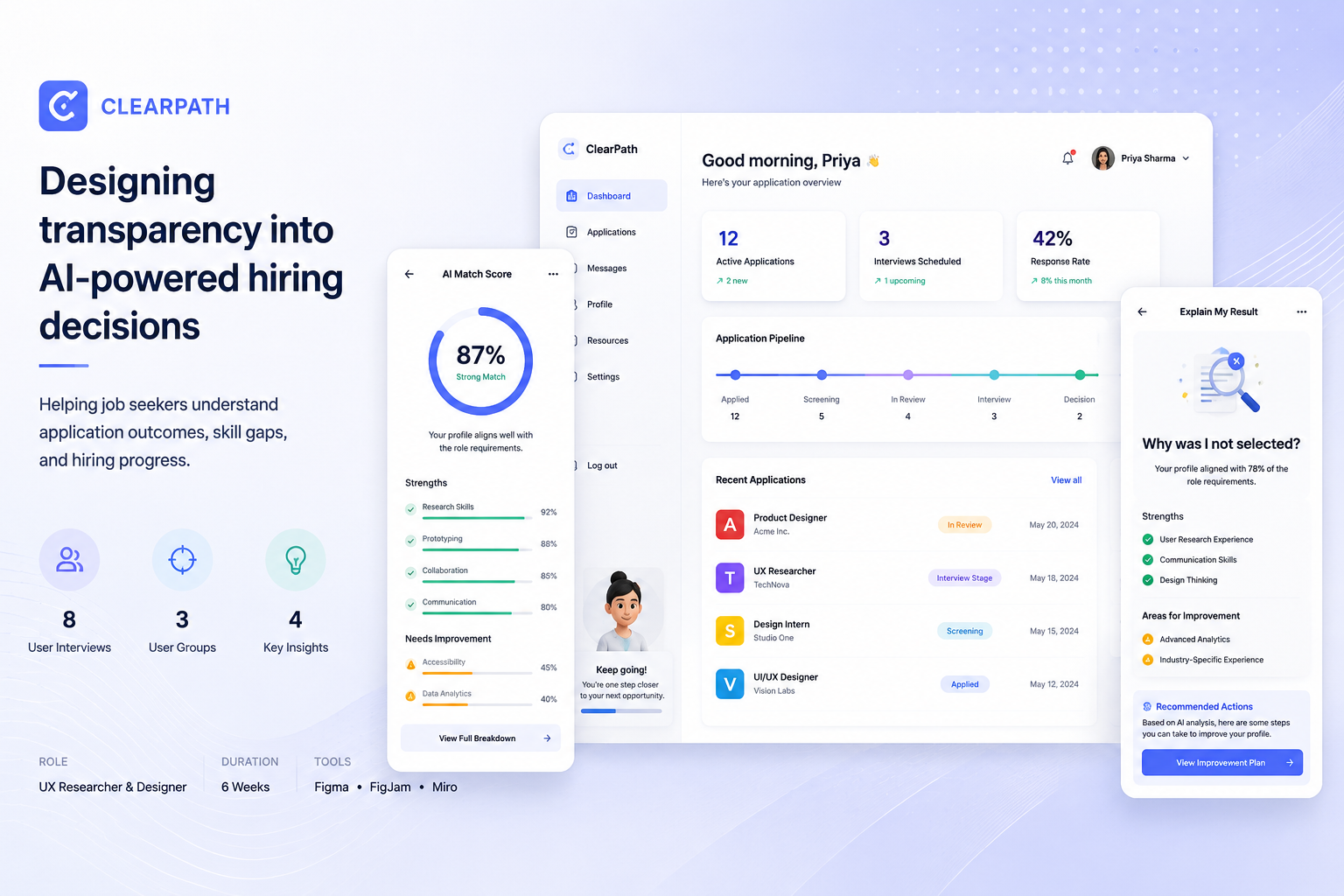
Designing transparency into AI-powered hiring decisions
Helping job seekers understand application outcomes, skill gaps, and hiring progress.
Making opaque decisions understandable
ClearPath explores a more transparent experience for candidates navigating AI-assisted hiring. The concept connects application tracking, explanation of evaluation outcomes, and personalized opportunities for improvement.
The design direction focuses on practical clarity: where an application stands, how a candidate aligns with a role, what may need improvement, and what steps to take next.
Candidates receive decisions, but not explanations
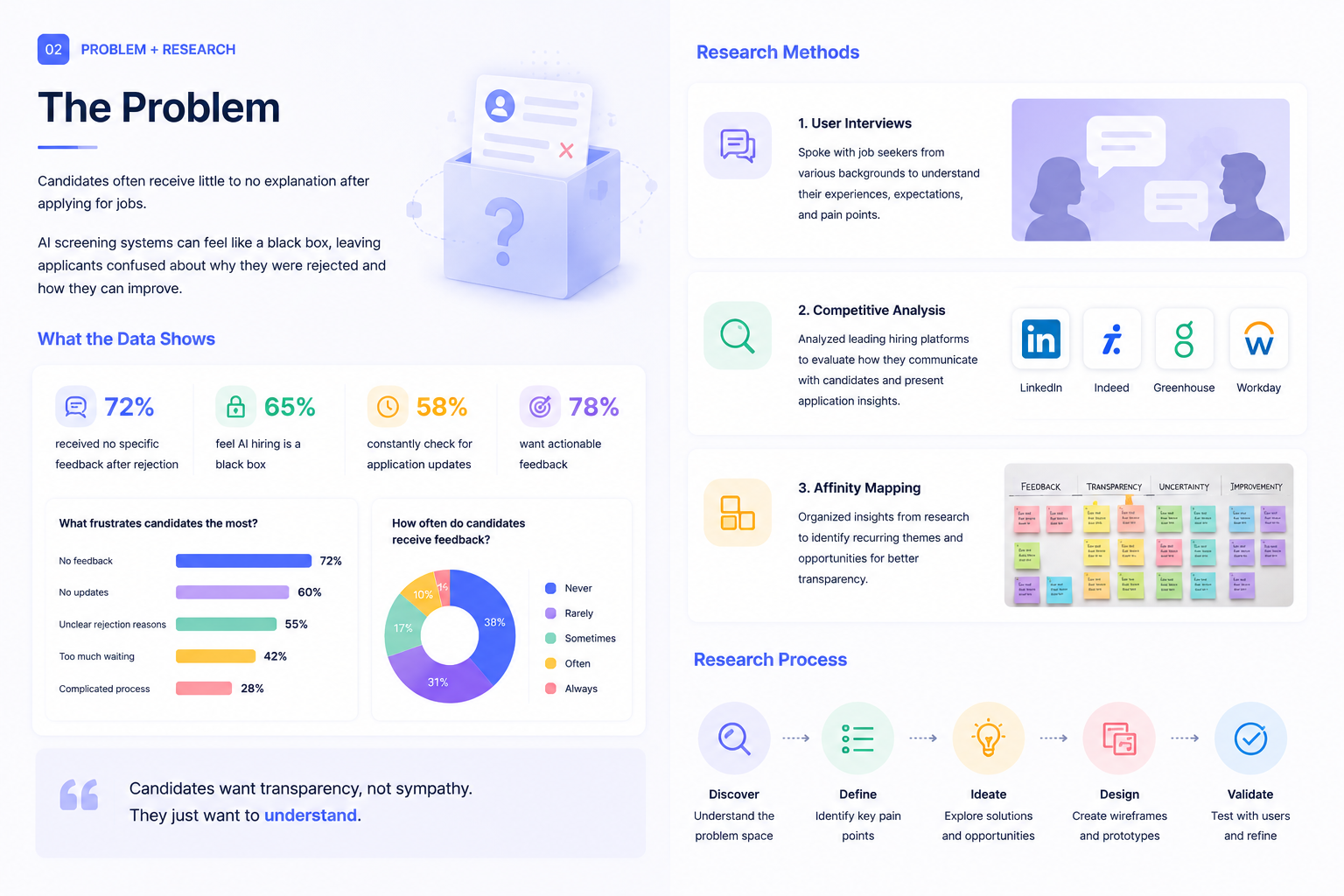
Candidates often receive little or no explanation after applying for jobs. AI screening systems can feel like a black box, leaving applicants confused about why they were rejected and how they can improve.
The project combined interviews with job seekers, competitive analysis of hiring platforms including LinkedIn, Indeed, Greenhouse, and Workday, and affinity mapping to identify recurring pain points.
The research presentation reports 72% receiving no specific feedback after rejection, 65% feeling AI hiring is a black box, 58% constantly checking for updates, and 78% wanting actionable feedback. Those figures are reproduced from the original project presentation.
Transparency matters more than another status label
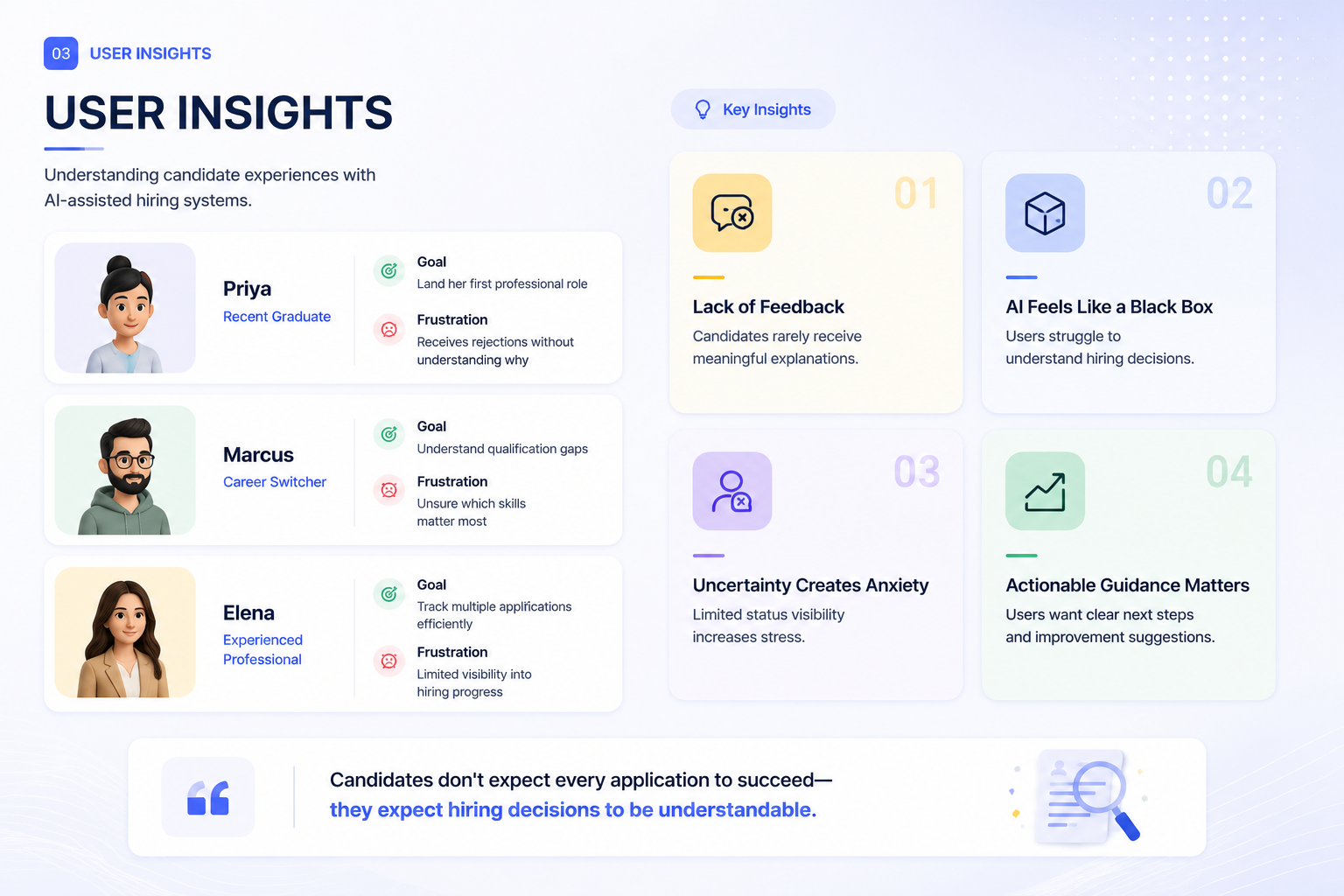
The personas captured three job-seeker perspectives: Priya, a recent graduate pursuing her first professional role; Marcus, a career switcher trying to understand qualification gaps; and Elena, an experienced professional managing multiple applications.
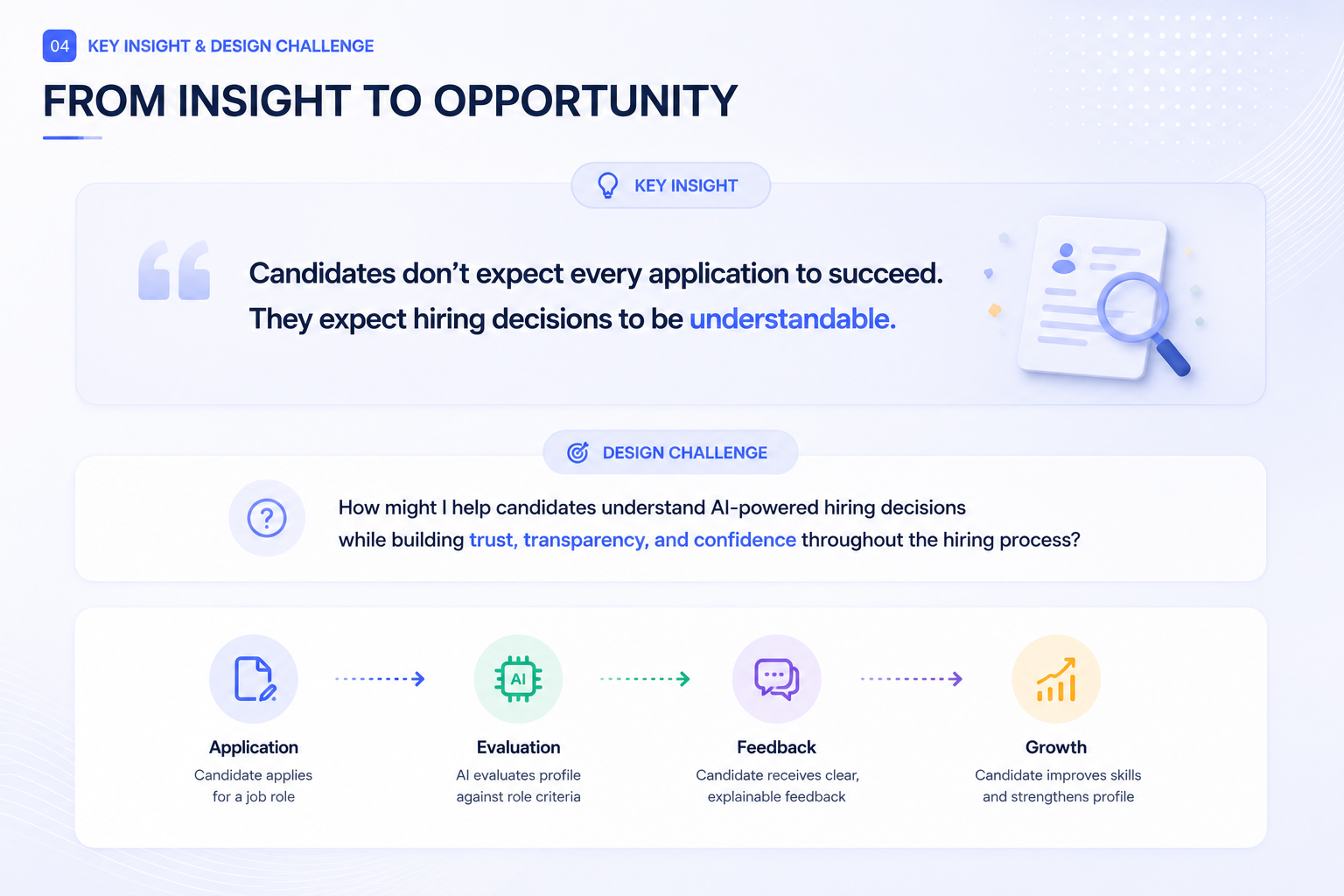
Four themes emerged: a lack of meaningful feedback, uncertainty around AI-driven decisions, anxiety caused by limited status visibility, and demand for actionable guidance. The unifying insight was that candidates do not expect every application to succeed—they expect the decision to be understandable.
From insight to opportunity
The guiding challenge was: How might we help candidates understand AI-powered hiring decisions while building trust, transparency, and confidence throughout the hiring process?
The proposed journey links application, evaluation, feedback, and growth so an outcome is not the end of the experience. A candidate should be able to use information from one application to prepare for the next opportunity.
An iterative approach to designing for trust
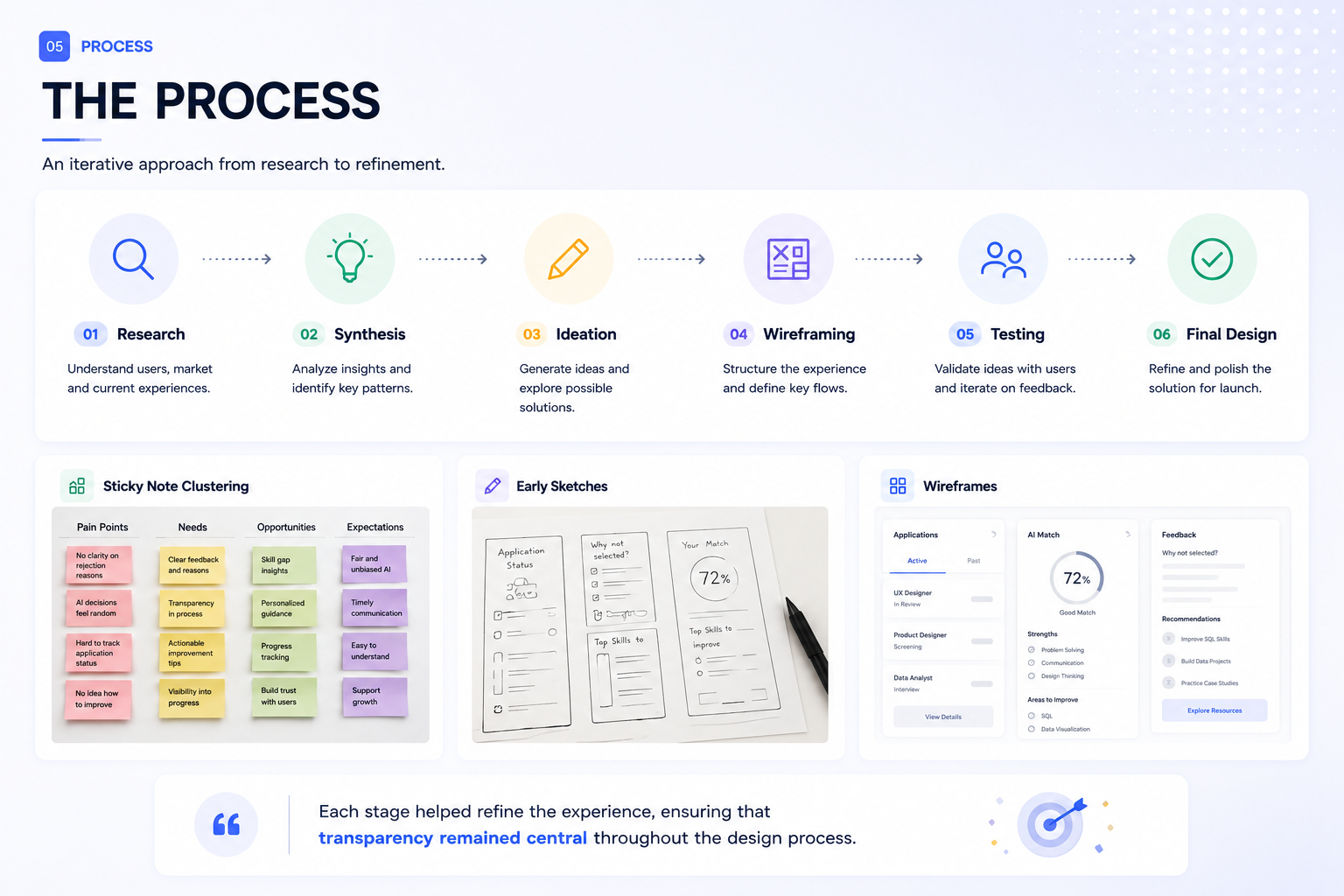
The work progressed through research, synthesis, ideation, wireframing, testing, and final design. The original process artifacts show sticky-note clustering, early paper sketches, and wireframes exploring application status, AI match information, and feedback.
Moving from broad interview themes into interface concepts helped align the product experience with the most persistent research need: useful explanations rather than unexplained scores.
Three concepts that address uncertainty
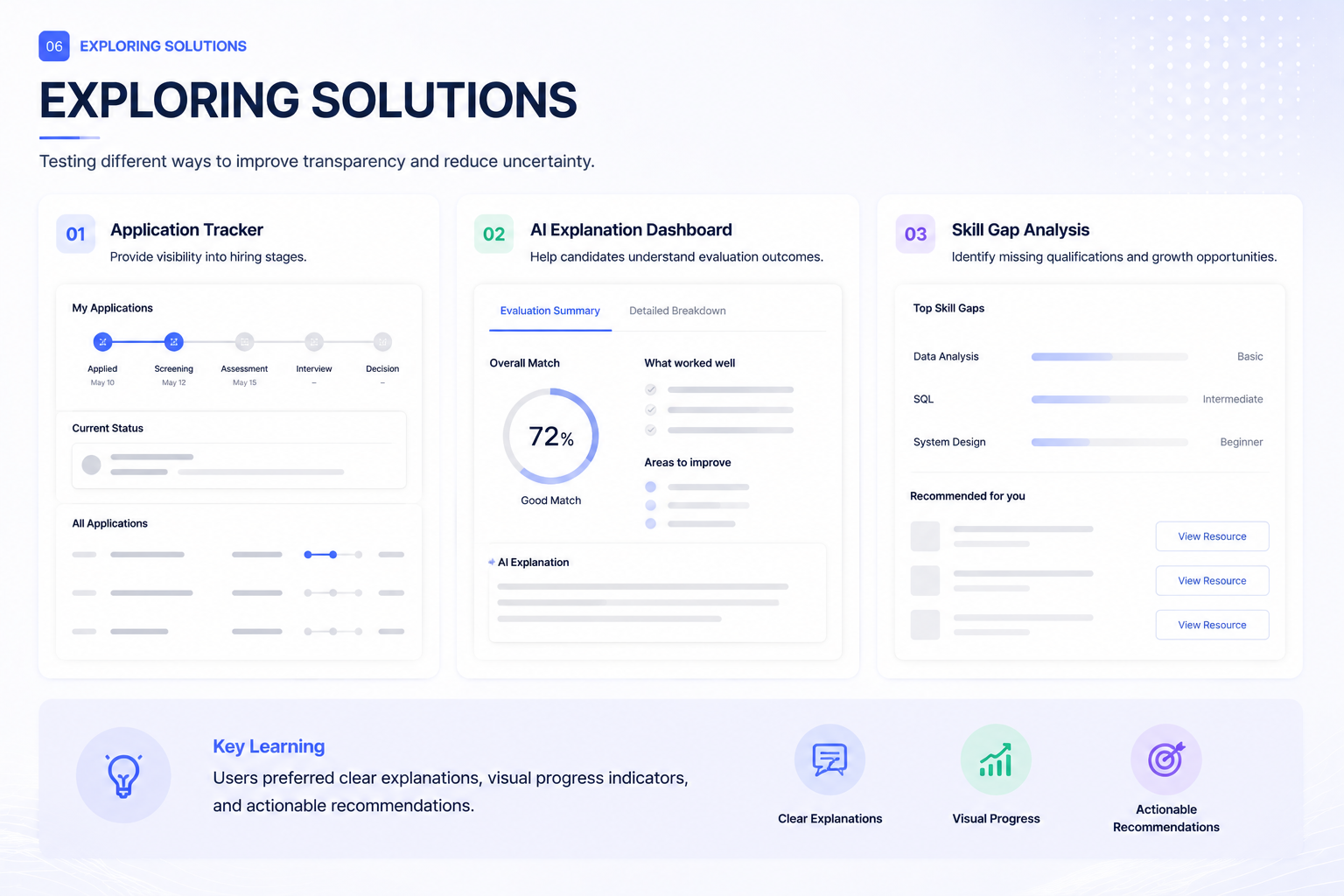
Application Tracker: a visible hiring-stage timeline, so candidates can understand progress without repeatedly searching for updates.
AI Explanation Dashboard: a breakdown of evaluation outcomes, giving more context than a single match percentage.
Skill Gap Analysis: areas for improvement paired with learning resources or other practical next steps. The project explored how clear explanations, visual progress indicators, and actionable recommendations could work together.
Clarity across the entire application journey
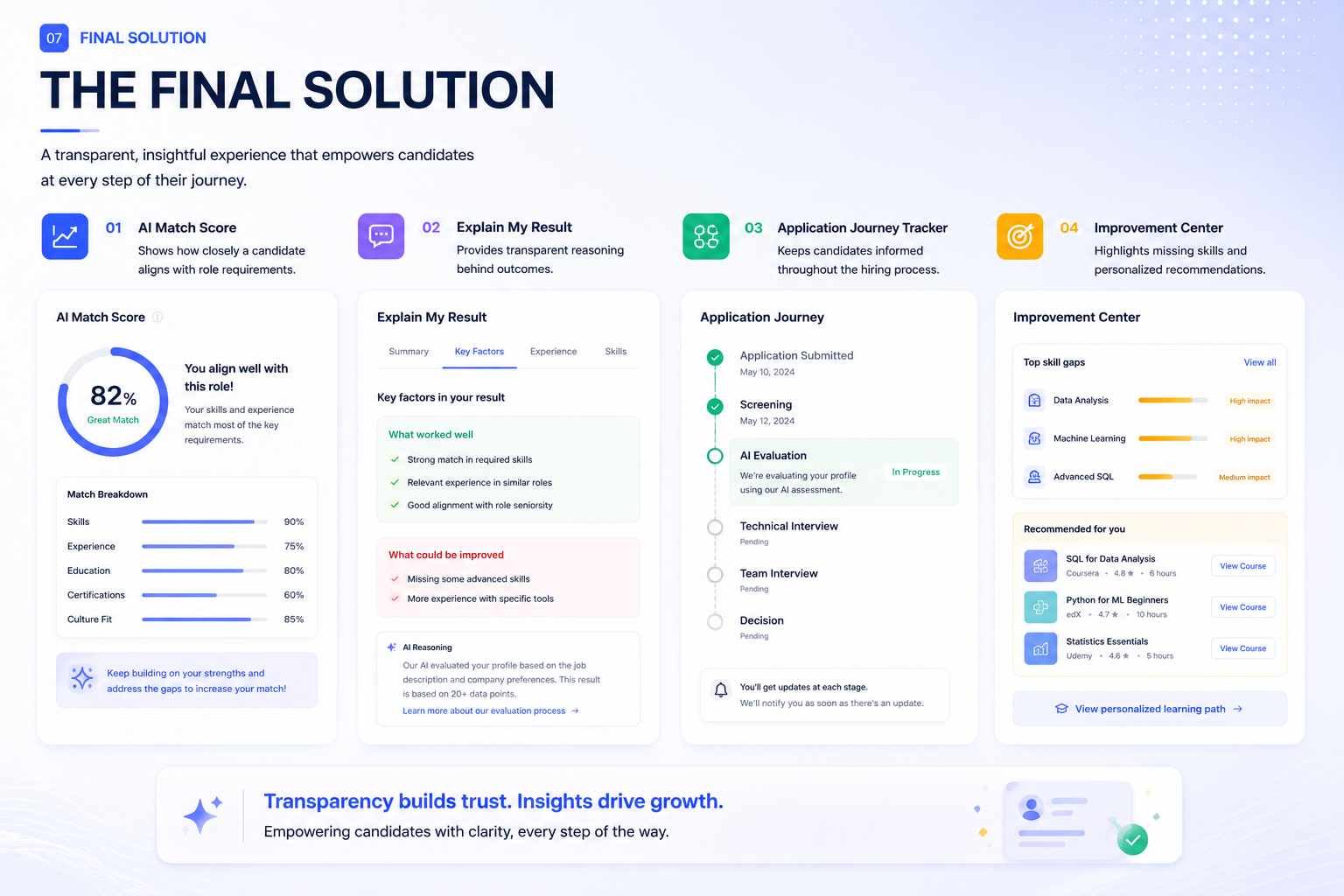
The final concept combines an AI Match Score, Explain My Result, an Application Journey Tracker, and an Improvement Center. A result screen outlines strengths alongside areas for improvement, while the tracker gives candidates a readable sense of what stage comes next.
The Improvement Center translates gaps into personalized learning suggestions. In the prototype, these surfaces are designed to work as a connected experience, making transparency actionable rather than presenting information in isolation.
From application to informed next steps
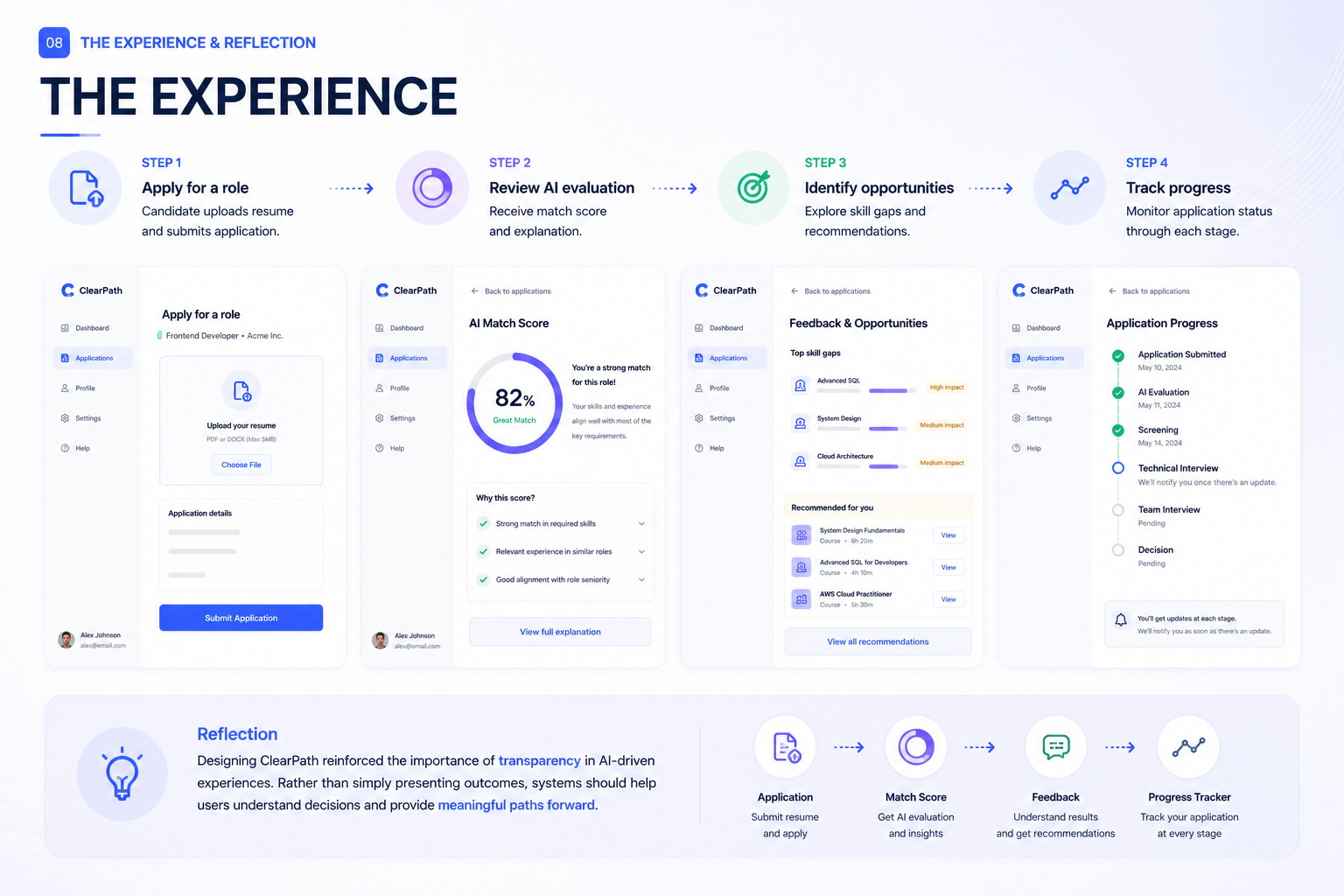
The end-to-end experience follows four steps: apply for a role, review the AI evaluation and explanation, identify opportunities, and track progress through the hiring stages.
Designing ClearPath reinforced the importance of transparency in AI-driven experiences. Rather than simply presenting outcomes, systems should help users understand decisions and provide meaningful paths forward.