MapTogether — designing collaborative trip planning within Google Maps
Plan together, decide together, and make more room for the experiences that matter.
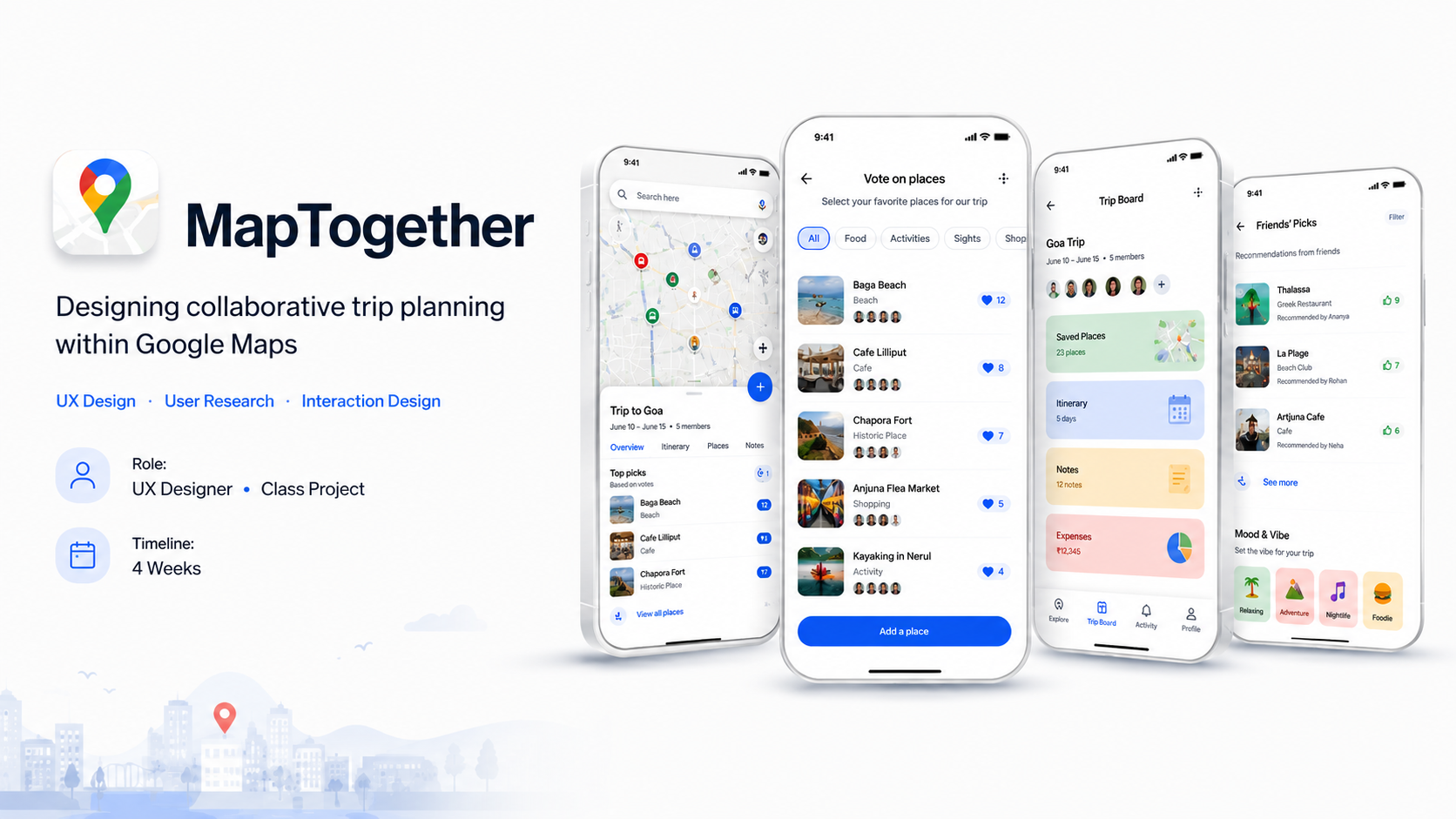
Planning together, without switching between apps
MapTogether explores a collaborative trip-planning experience within Google Maps. Instead of discovering places on one platform and deciding what to do across scattered messages and notes, groups can gather ideas, compare places, and organize a shared itinerary in one place.
This four-week class project focuses on UX design, user research, and interaction design. Its guiding idea is simple: people should be able to plan together in the tool they already use to explore places.
A collaborative planning concept within Google Maps, connecting places, people, and shared decisions.
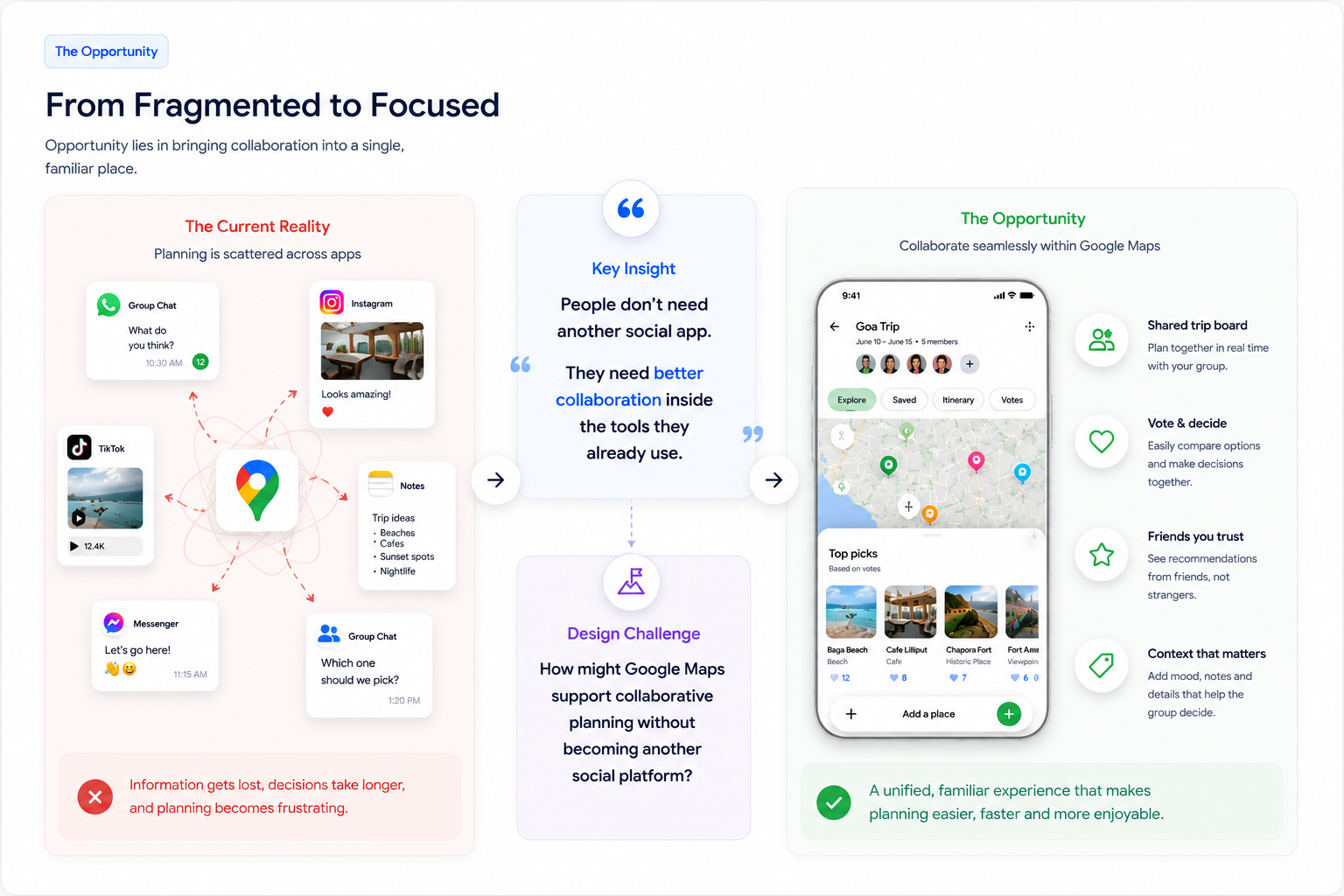
Trip discovery and group decisions happen in different places
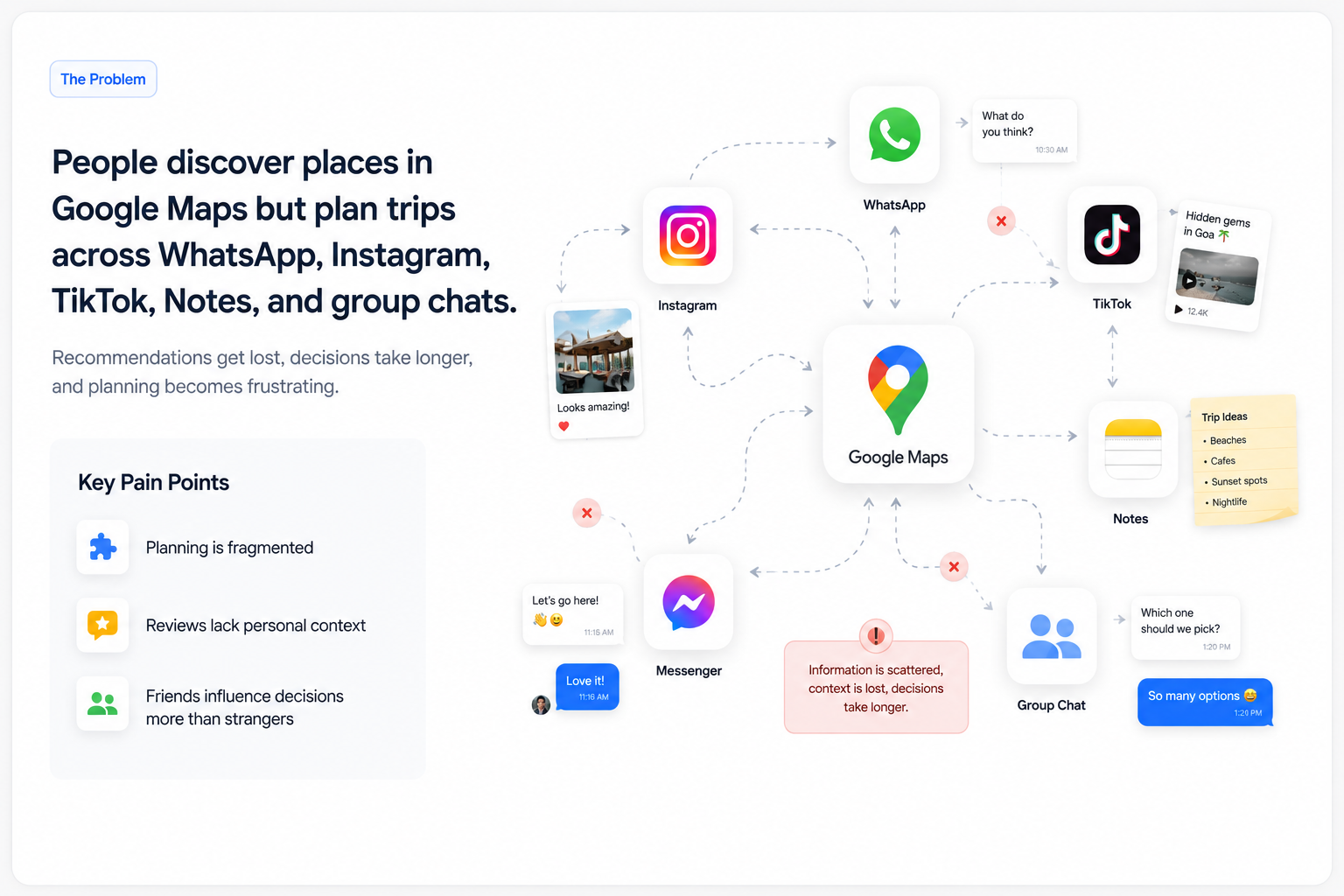
People discover places in Google Maps but plan trips across WhatsApp, Instagram, TikTok, Notes, and group chats. Recommendations get buried, details lose context, and each additional suggestion can make agreement more difficult.
The research framing identified three main obstacles: fragmented planning, reviews without personal context, and the outsized importance of friends in group decisions. The goal was to reduce that fragmentation without adding another separate social app.
Understanding the people behind the planning problem
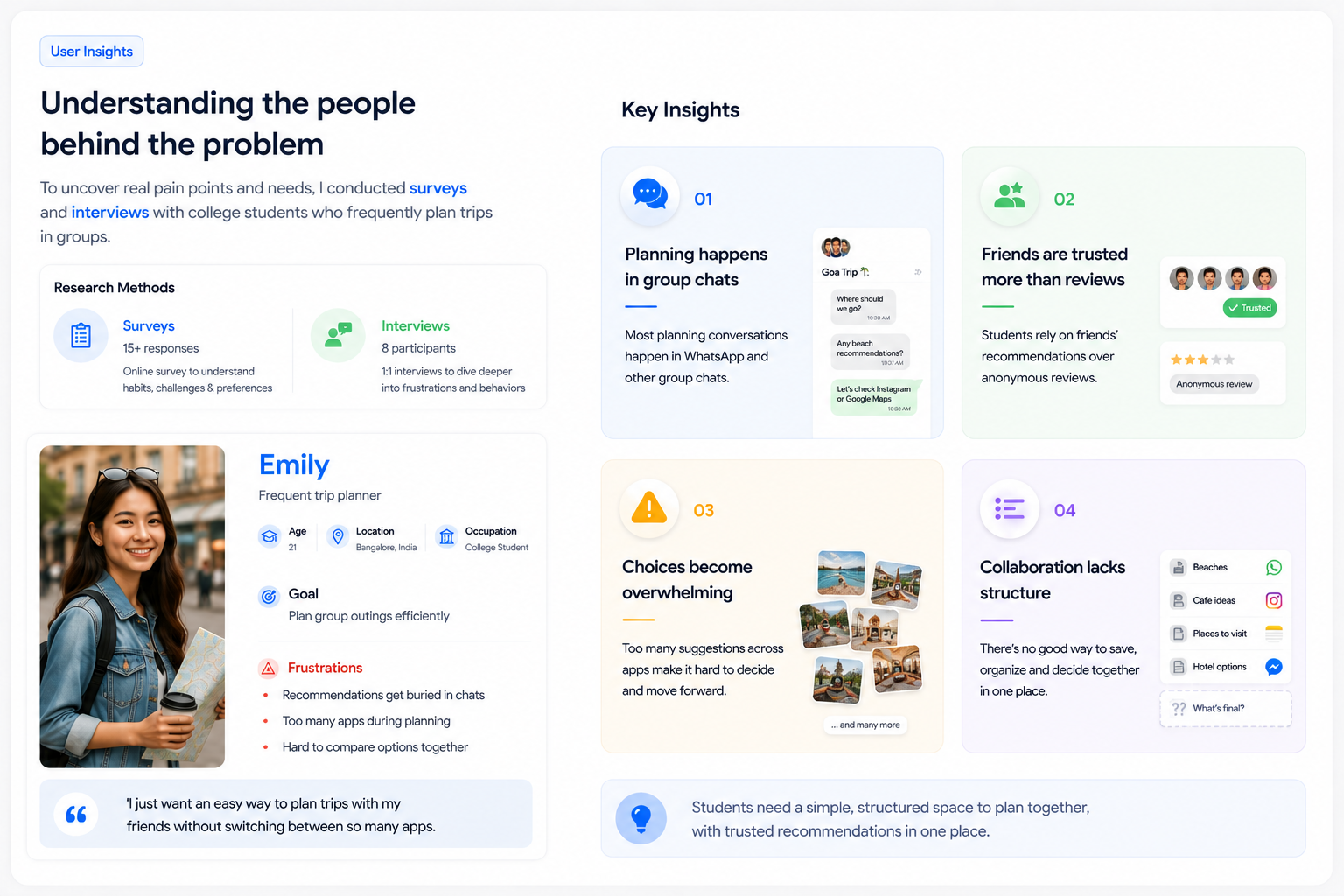
The project used surveys with more than 15 responses and interviews with eight participants to better understand how college students plan trips together. The presented persona, Emily, is a frequent trip planner who wants to coordinate group outings without switching between many apps.
Four insights guided the design: conversations happen in group chats, friends are trusted more than anonymous reviews, abundant choices can become overwhelming, and collaboration lacks a structured home.
Together, these findings suggested a familiar, shared planning space that brings trusted recommendations and decisions into the same context.
From fragmented ideas to focused decisions
The central insight was that people do not need another social app. They need better collaboration inside tools they already use. A shared planning layer within Google Maps could preserve location context while supporting the group conversation.
The design challenge became: How might Google Maps support collaborative planning without becoming another social platform? The proposed approach centers on shared trip boards, group voting, friend reviews, and notes or mood tags that give a recommendation useful context.
Exploring structure, trust, and group decisions
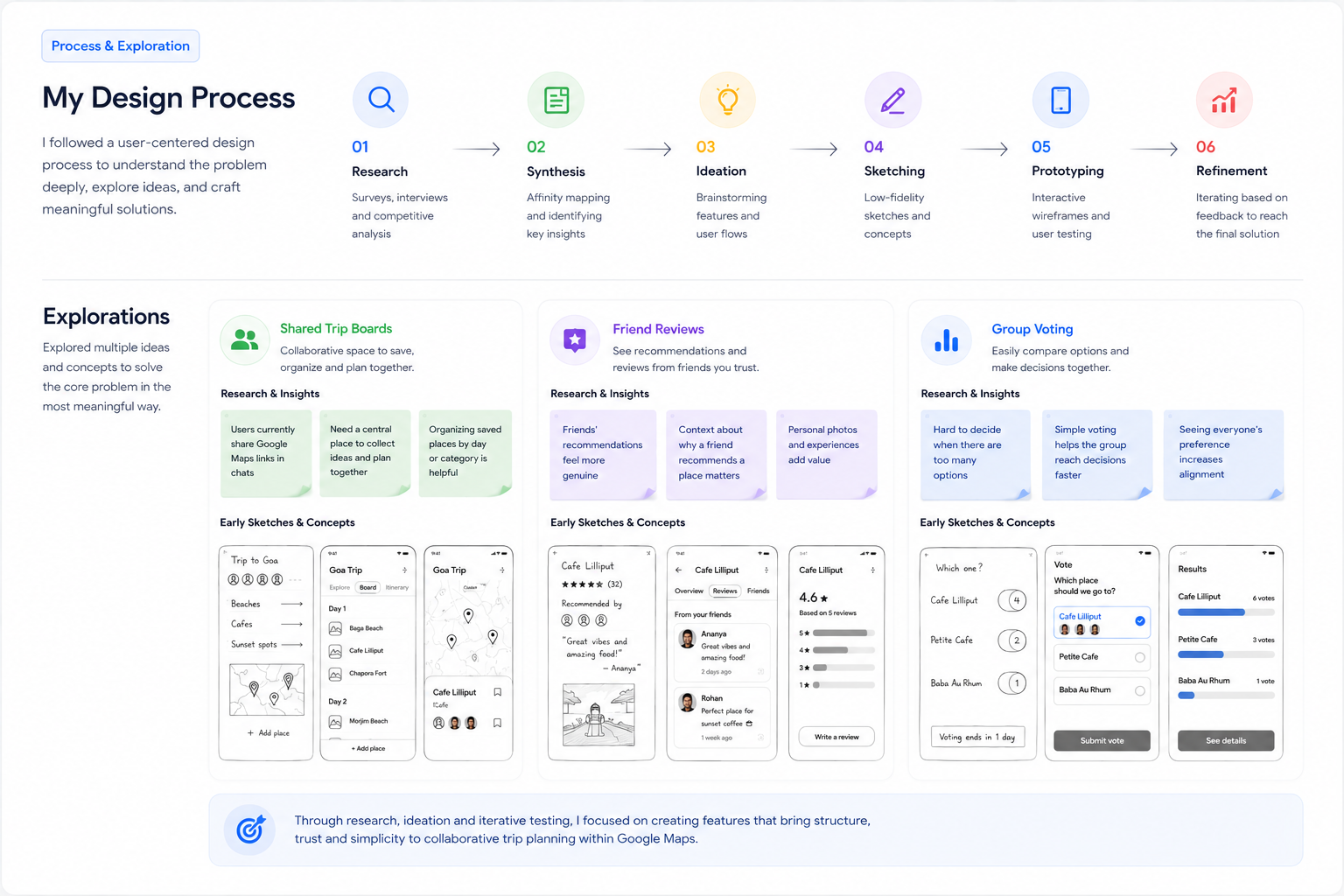
The design process moved from research and synthesis into ideation, sketching, prototyping, and refinement. The original explorations show sketches and concept screens for shared trip boards, friend reviews, and group voting.
Each direction addressed a different obstacle uncovered in research: trip boards gave scattered ideas a home; friend reviews made recommendations feel more relevant; voting helped groups compare options and move toward a decision.
Rather than treating these as isolated features, the exploration considered how they could fit into one familiar mapping workflow.
A collaborative planning layer within Google Maps
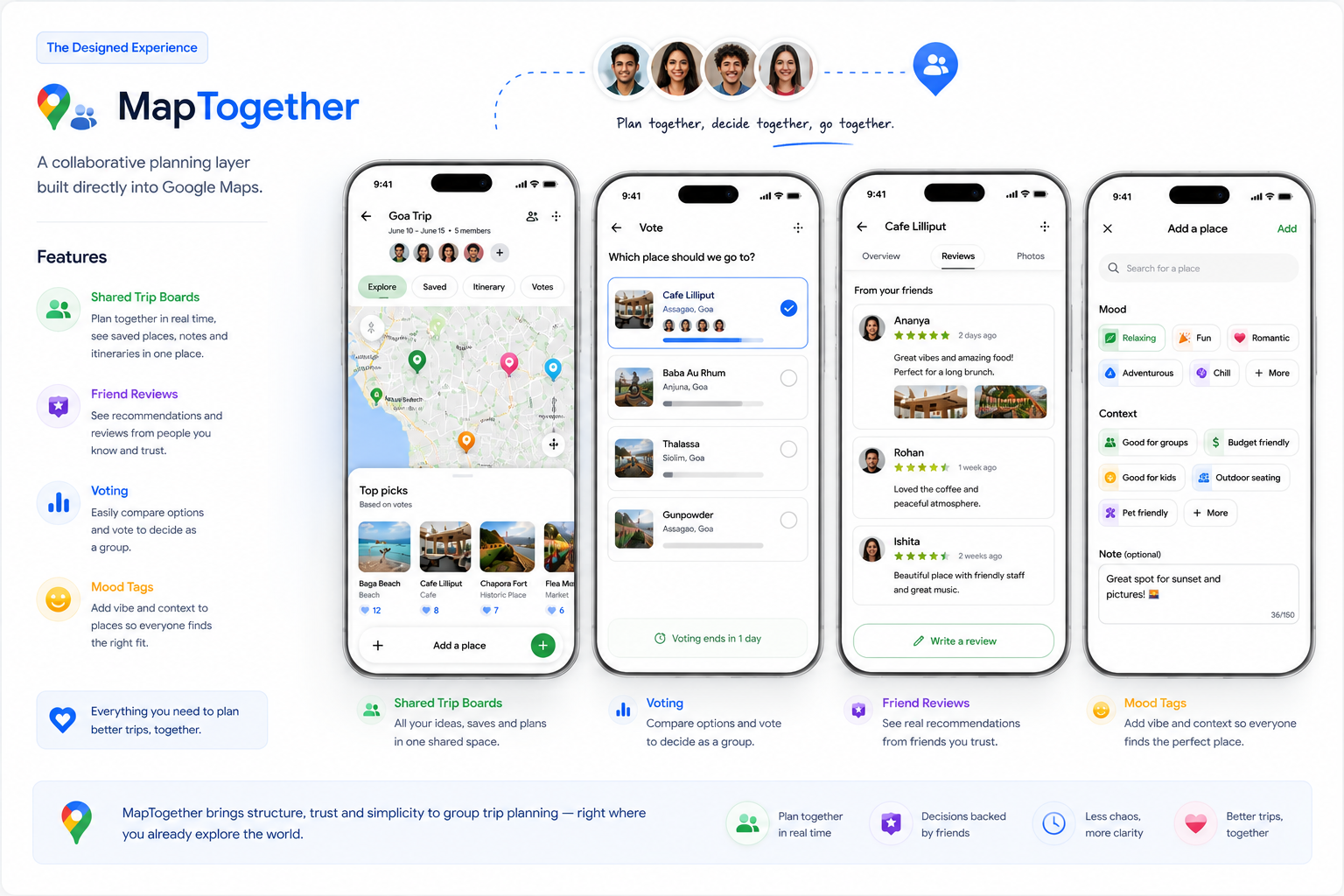
The proposed MapTogether experience connects saved locations, shared trip boards, friends’ reviews, group voting, and mood tags. Members can add places to a shared board, see choices on the map, and carry those choices into a trip itinerary.
Friend reviews provide first-hand context rather than only anonymous ratings. Voting surfaces preferences for the group, while mood tags and notes help people explain why a place might fit a particular trip.
The design keeps exploration and decision-making close together so planning can move naturally from discovering places to agreeing on what to do.
Emily’s weekend trip: from ideas to itinerary
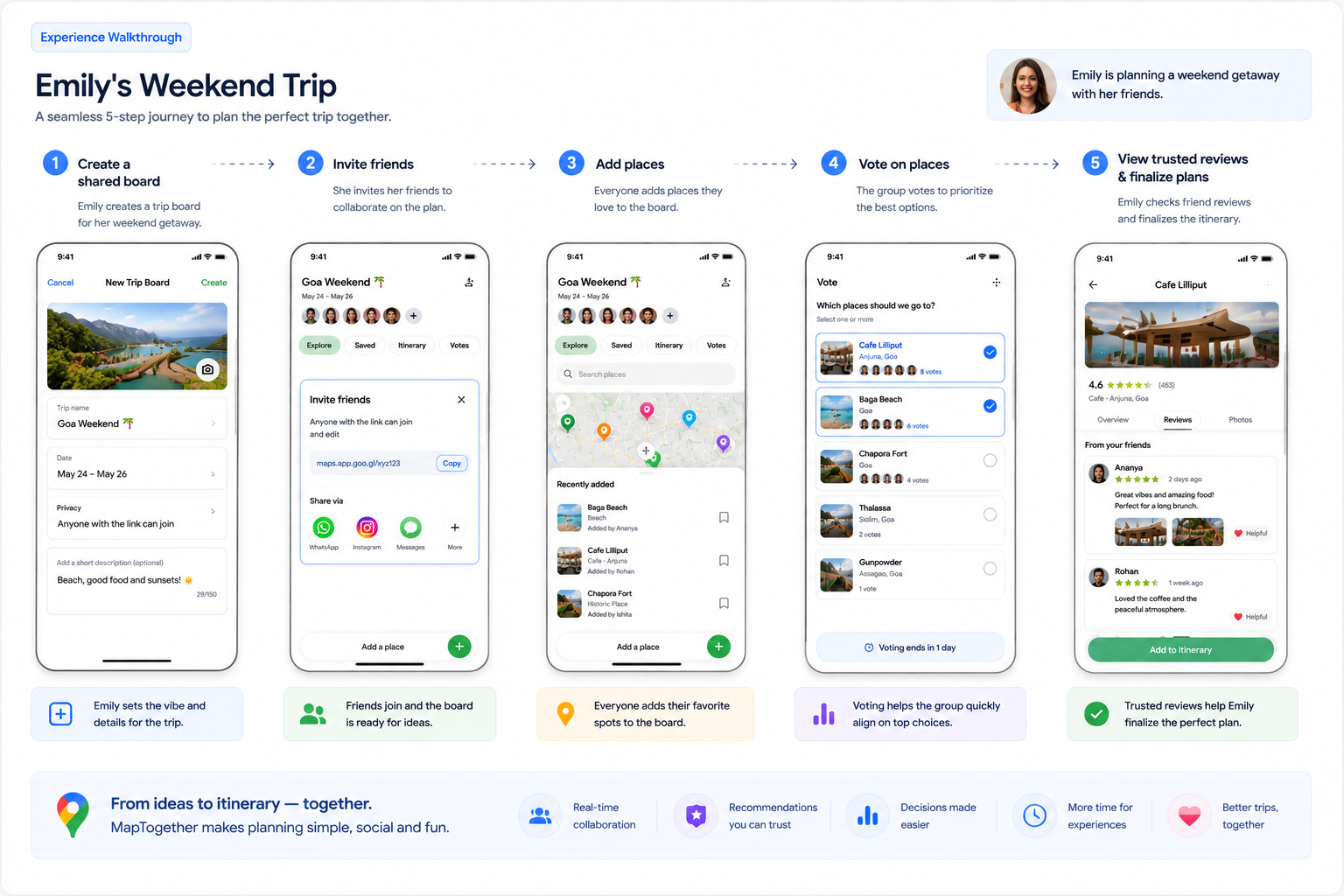
The original experience walkthrough follows Emily as she creates a shared trip board for a weekend getaway, invites friends, and gives everyone a place to add their favorite spots.
Once the suggestions are collected, the group votes on options. Emily then reviews trusted feedback from friends and uses the shortlisted places to finalize the itinerary. The five steps show how the features combine into a continuous collaborative journey rather than a set of separate screens.
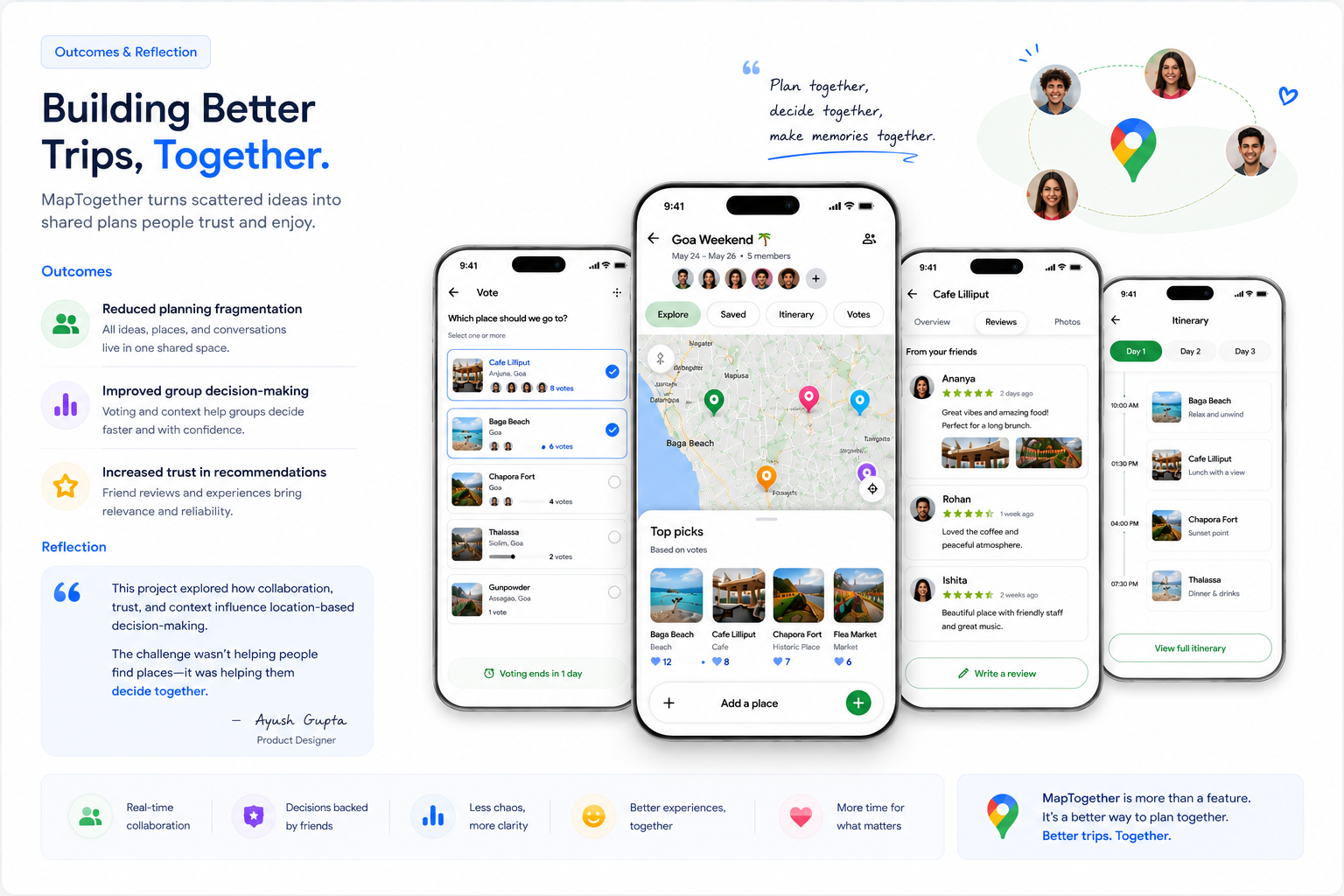
Building better trips, together
The intended design outcomes are reduced planning fragmentation, clearer group decisions, and increased relevance of recommendations from friends. Bringing ideas, voting, reviews, and itinerary building into one space addresses the challenges identified earlier in the project.
The reflection highlights a central lesson of the work: location-based planning is not simply about helping people find places. It is about supporting people as they decide together, using collaboration, trust, and shared context.
These are design outcomes and anticipated benefits shown by the concept, not claims of a measured improvement in a released product.